Token Economy
As technology progresses within contemporary education, educational technologies (such as ClassDojo) can be applied to facilitate token economies (Bolick and Cooper, 1998).
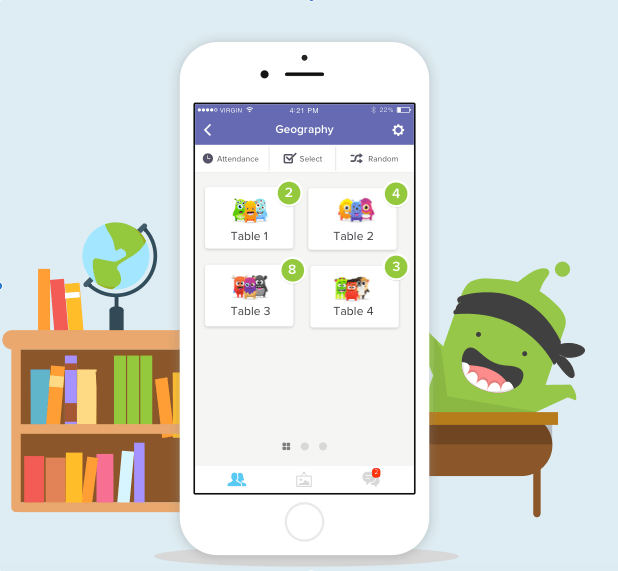 The Points system within the ClassDojo app advocates for token economies, as pupils may be encouraged to collect a specific quantity of points in exchange for a tangible reward (Robacker, Rivera and Warren, 2016, p. 40). Token rewards are believed to link points systems to reality and indicate that persistent achievements contain real-life value, thus encouraging children to continue rewarded behaviour (Morgan, 2008, p.28). Robacker, Rivera and Warren (2016) compare the limitations of the token economy strategy to that of labelling, suggesting that the deduction of points or tokens can also cause pupils to develop a self-fulfilling prophecy, as deducting points may reinforce the need to demonstrate positive behaviour, whilst others may respond through further disruption (Truchlicka, McLaughlin and Swain, 1998).
___________________________________________________________________________________________________________________________________________________________
Behavioural Management
Primarily, the ClassDojo app is implemented to aid practitioners in the management of pupil behaviour. However, it is prominent that the application alone cannot deal with the varying degrees of all pupil behaviour, as its features avoid interpersonal communication.
Rogers (2015, p. 163) highlights, for behaviour management strategies to transpire, teachers should consider how rewards are distributed within the classroom. It is important to motivate students using a mixture of intrinsic (enjoyment driven) and extrinsic (reinforcement driven) rewards in order to avoid pupils becoming reliant upon praise and extrinsically motivated rewards.
Additionally, teachers must adhere to specific guidelines exhibited within schools’ individual behaviour policies. It is important that teachers evaluate the extent of disrupted behaviour alongside the sanction that it deserves, pupils must be made aware that they will be held accountable for the negative choices that they make, and teachers must ensure that they are ‘calm but firm’ when applying sanctions as an inconsistent approach to managing behaviour suggests to pupils that they will not be punished as they should have (Rogers, 2015, pp.180-181).
The ClassDojo app provides extrinsic, point-based rewards to pupils; therefore, teachers must implement additional classroom rewards which observe children’s intrinsic interests, in order to prevent children becoming reliant on praise and extrinsic rewards.
The application seems to mirror traditional behavioural management strategies, non-verbal correction is often used by practitioners to correct behaviour. Traditional non-verbal correction includes hand gestures and eye contact. Not every behavioural action does not require a verbal response from a teacher, a teachers body language can communicate with their class. (Miller, 1988, p.4). The awarding or deduction of ClassDojo points is an example of non-verbal, digital correction that practitioners can use within the classroom. Similarly, the distribution of ClassDojo points mirrors the traditional allocation of ‘house points’ or ‘golden points’ that are awarded to pupils.
 ClassDojo